  AP432's Road to Recovery: From a Flipping Foot to Steady StepsAfrican Penguin number 432 (AP432) was rescued from Foxy Beach (Simon's Town) at the end of July after being found unable to stand, with injuries to both feet and a deep cut on the right leg. The wound on the leg was cleaned and stapled closed, while the foot injuries required more intensive care. Complicated by bone infections, the feet were treated with antibiotic infusions and ongoing wound care.Walking was especially challenging at first, as the left foot would flip back. With time, treatment, and the support of a specially designed bootie, AP432 has gradually regained normal movement. The penguin is now going through the rehabilitation process, and every day is a day closer to being released. AP432's Road to Recovery: From a Flipping Foot to Steady StepsAfrican Penguin number 432 (AP432) was rescued from Foxy Beach (Simon's Town) at the end of July after being found unable to stand, with injuries to both feet and a deep cut on the right leg. The wound on the leg was cleaned and stapled closed, while the foot injuries required more intensive care. Complicated by bone infections, the feet were treated with antibiotic infusions and ongoing wound care.Walking was especially challenging at first, as the left foot would flip back. With time, treatment, and the support of a specially designed bootie, AP432 has gradually regained normal movement. The penguin is now going through the rehabilitation process, and every day is a day closer to being released.
_(4).jpg)
Avian Influenza Outbreak: Update on Seabird Cases and SANCCOB's ResponseA new outbreak of High Pathogenicity Avian Influenza (HPAI) was confirmed in wild seabirds across the Western Cape in July 2025. Since 12 September, over 600 HPAI cases have been reported in wild seabirds, including Hartlaub's and Grey headed Gulls, Great White Pelicans, Kelp Gulls, White-breasted, Reed, Crowned and Cape Cormorants, Swift and Common Terns, and an Eurasian Whimbrel.SANCCOB's priority is protecting its seabird hospitals and supporting conservation authorities with response efforts. To date, 34 Personal Protective Equipment (PPE) and disinfectant kits have been distributed in the Western and Eastern Cape to rangers, first responders, and response vehicles. Temporary quarantine units have been established at SANCCOB facilities to isolate and screen rescued seabirds before admission, ensuring strict biosecurity.This outbreak is placing heavy financial strain on our resources, from PPE and laboratory testing to quarantine and staffing. Every contribution helps us protect South Africa's seabirds - SANCCOB DonationsWe urge all our followers and supporters to remain vigilant and to report any seabirds that are displaying the following symptoms:
- Twitches or seizures
- Unusual tameness or other abnormal behaviour
- Cloudy eyes
- Weakness or an inability to walk or fly
HPAI can spread to humans, and while symptoms are usually mild, it is critical to report any bird showing signs of illness to SANCCOB immediately. Do not touch or approach seabirds - please contact SANCCOB to collect and care for them safely.
From Readers to Their Feathered Friends
In our August Newsletter we asked our readers to write a letter to a penguin or a seabird undergoing care at SANCCOB. Please see some of letters below:
To all the penguins being released to Boulders Beach, a poem reflecting on how wonderful you are. We are all cheering for you.
In the cool of the shade
In the heat of the day
Down by the boulders
Where the penguins play
Under the palms
Under the sun
Next to the waves
Where the penguins run
Stay, oh my penguins
Stay with us I pray
Down by the boulders
In the heat of the day
- Much love from Garth, a former SANCCOB volunteer.
Dear Penguin,
I am 8 and a half.
I hope you have a lovely time at SANCCOB. Think of it as a luxury spa. Grow up to be a strong penguin.
- Love Grace Speres
Dear little penguins,
You are stronger than you know. Each day you heal, you remind me how resilient and full of spirit you are. I am rooting for your recovery and looking forward to the day you waddle freely by the sea again. May more people learn to treat you with kindness and respect, so your future is safe and bright. Keep fighting. You are loved and never alone.
- Grace Schuette
To everyone who took the time to write a letter to a penguin or seabird, thank you. It has been a joy to read them.
If you still want to write a letter to a penguin or seabird the invitation is still open and we would like to hear from you.
Please follow this link to write a letter to a seabird: https://forms.gle/GbRWUi66XCETP7Jj6
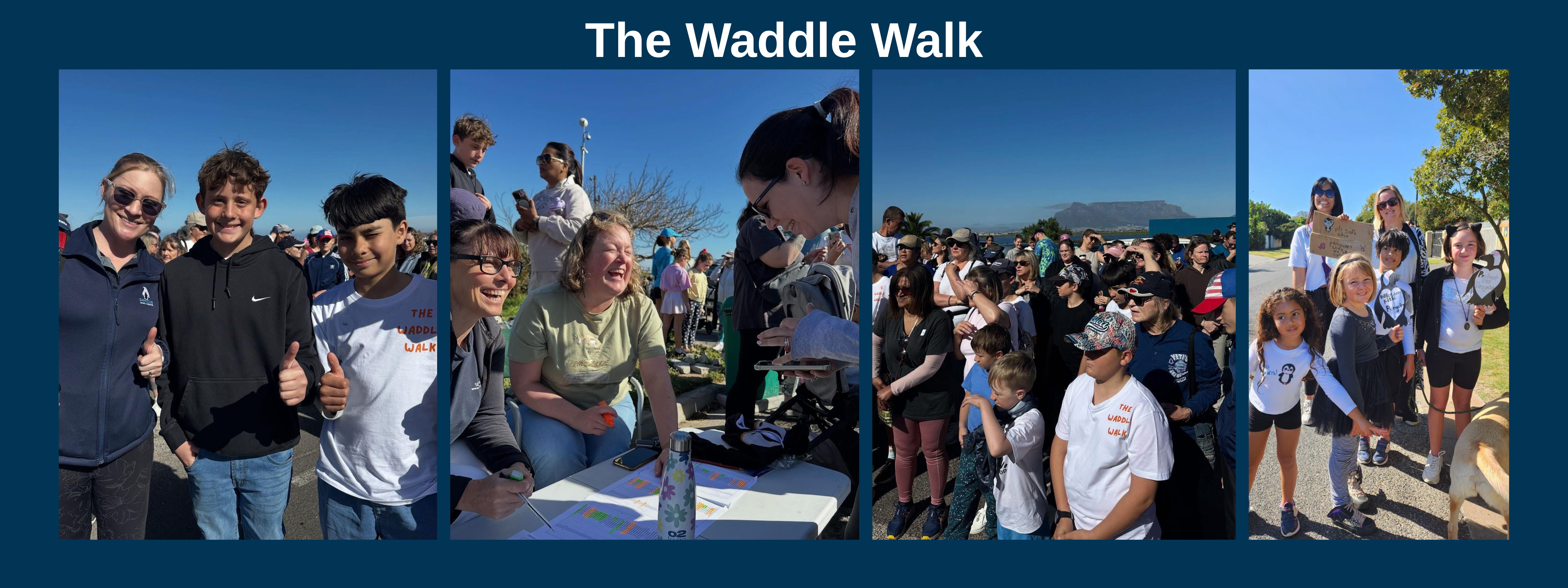
The Waddle Walk A Community Effort for Seabirds
On 6 September, the Waddle Walk took place as a wonderful fundraising initiative in support of SANCCOB. The event brought together an incredible mix of participants, from pets to prams, and it was clear that everyone had a fantastic time while supporting a worthy cause.
We were thrilled to see such a strong turnout, with so many people joining in to make a difference for South Africa's seabirds. A heartfelt thank you goes to Alexander du Plessis and his mother for organizing this special event and for choosing SANCCOB as the beneficiary. Their dedication and enthusiasm truly made the day a success.
SANCCOB Staff Accomplishments
SANCCOB's researcher, Albert Snyman, published a new paper examining a rare and tragic event in September 2021, when more than 60 African Penguins from the Boulders Beach colony died after being attacked by a swarm of Cape honeybees. Post-mortem examinations revealed multiple stings, particularly around the eyes, with no other injuries detected. Toxicology and veterinary tests ruled out disease, confirming that the bee stings were the most likely cause of death. This study highlights an unusual threat to penguin colonies and the importance of monitoring nearby beekeeping activity and artificial nesting sites.
Please follow the link to read further:
https://www.tandfonline.com/doi/full/10.1080/01584197.2025.2550453
Our Features
_(4).jpg) |